Make September the Month You Get Your Mitigation Work Done
September marks Wildfire Prevention Month, positioned at the point in the calendar when much of the western United States is at peak fire risk — vegetation is at its driest, and fire activity historically remains high through early fall. The month is used by fire agencies and safety organizations to focus public attention on the preventive measures homeowners and communities can take before conditions turn dangerous.
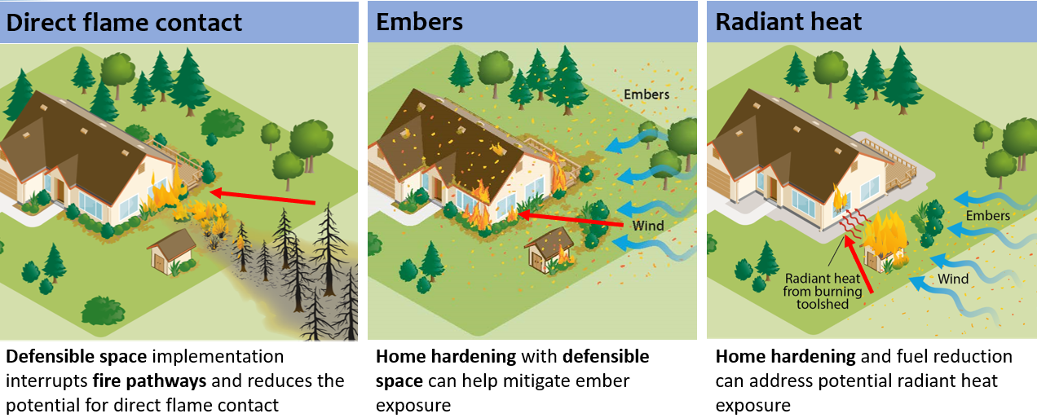
Wildfire prevention is generally addressed at two levels: large-scale efforts such as controlled burns and fuel management on public land, and individual property-level measures. Research from fire agencies and post-fire damage assessments, including studies by the Insurance Institute for Business & Home Safety (IBHS) and CAL FIRE, has consistently found that most home ignitions during wildfires are not caused by direct contact with a wall of flame, but by wind-blown embers landing on or near a structure — in gutters, under decks, against siding, or in unscreened vents. This is the basis for two primary mitigation strategies: defensible space and home hardening.
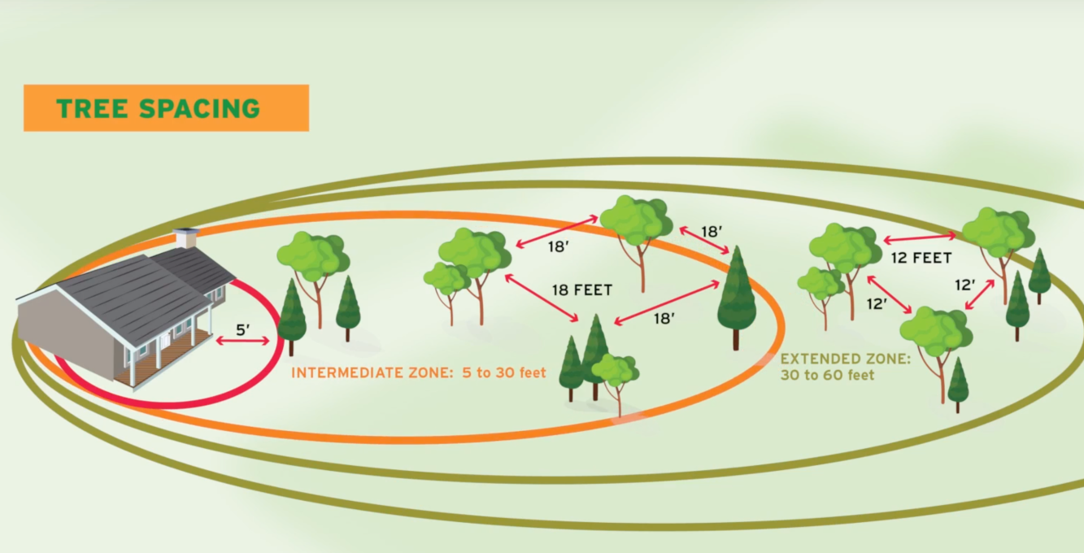
Defensible space is the maintained buffer between a structure and the surrounding vegetation, intended to slow or stop fire spread and reduce ember ignition risk. CAL FIRE and most western states organize defensible space into three zones based on distance from the home.
Home Hardening Measures
Home hardening refers to building-level modifications that reduce a structure’s vulnerability to ember ignition and direct flame contact:
- Install ember- and flame-resistant vents, or add 1/8-inch or less metal mesh screening to existing vents
- Use a Class A fire-rated roof and keep it clear of debris
- Enclose eaves and soffits; box in exposed rafter tails
- Replace single-pane windows with dual-pane and tempered glass
- Use ignition-resistant siding materials
- Screen or enclose the underside of decks and porches
- Seal gaps around doors, windows, and pipe or vent penetrations in exterior walls
- Install gutter guards to keep them free of ignitable debris
Defensible Space Zones
Zone 0 (0–5 feet from the structure)
- Remove dead plants, weeds, leaves, and needles from the roof, gutters, deck, and porch
- Replace bark or mulch with gravel, pavers, or concrete
- Keep branches trimmed at least 10 feet from any chimney or stovepipe
- Limit combustible furniture and planters on decks
- Relocate firewood and stacked lumber outside this zone
- Replace combustible fencing or gates attached to the home with noncombustible material
Zone 1 (5–30 feet from the structure)
- Mow grass to a maximum height of 4 inches
- Maintain horizontal and vertical spacing between shrubs and trees
- Trim tree branches to at least 6 feet above ground
- Remove dead branches, leaf litter, and accumulated debris
Zone 2 (30–100 feet from the structure)
- Thin dense brush and reduce heavier vegetation
- Maintain 10 feet of clearance to bare soil around woodpiles, outbuildings, and propane tanks
- Remove fallen branches and dead vegetation on a regular schedule
Some local jurisdictions set stricter requirements than state guidelines. Homeowners should confirm requirements with their local fire department or fire protection district.
Effectiveness
No mitigation measure eliminates wildfire risk entirely. However, damage assessments following major fires — including the Camp Fire and Tubbs Fire — have found that homes with defensible space and hardening features survived at higher rates than neighboring homes without them, even when exposed to comparable fire conditions. Wildfire Prevention Month is intended as a seasonal prompt for homeowners to review and complete this work before conditions worsen further into the fall.