Wildfire risk keeps growing, and so do home insurance costs. Many homeowners are asking how to make their homes safer, and what it will cost. Upfront costs for wildfire-resistant retrofits range from modest to significant. But new research suggests the price tag is only part of the story.
The benefits beyond fire protection
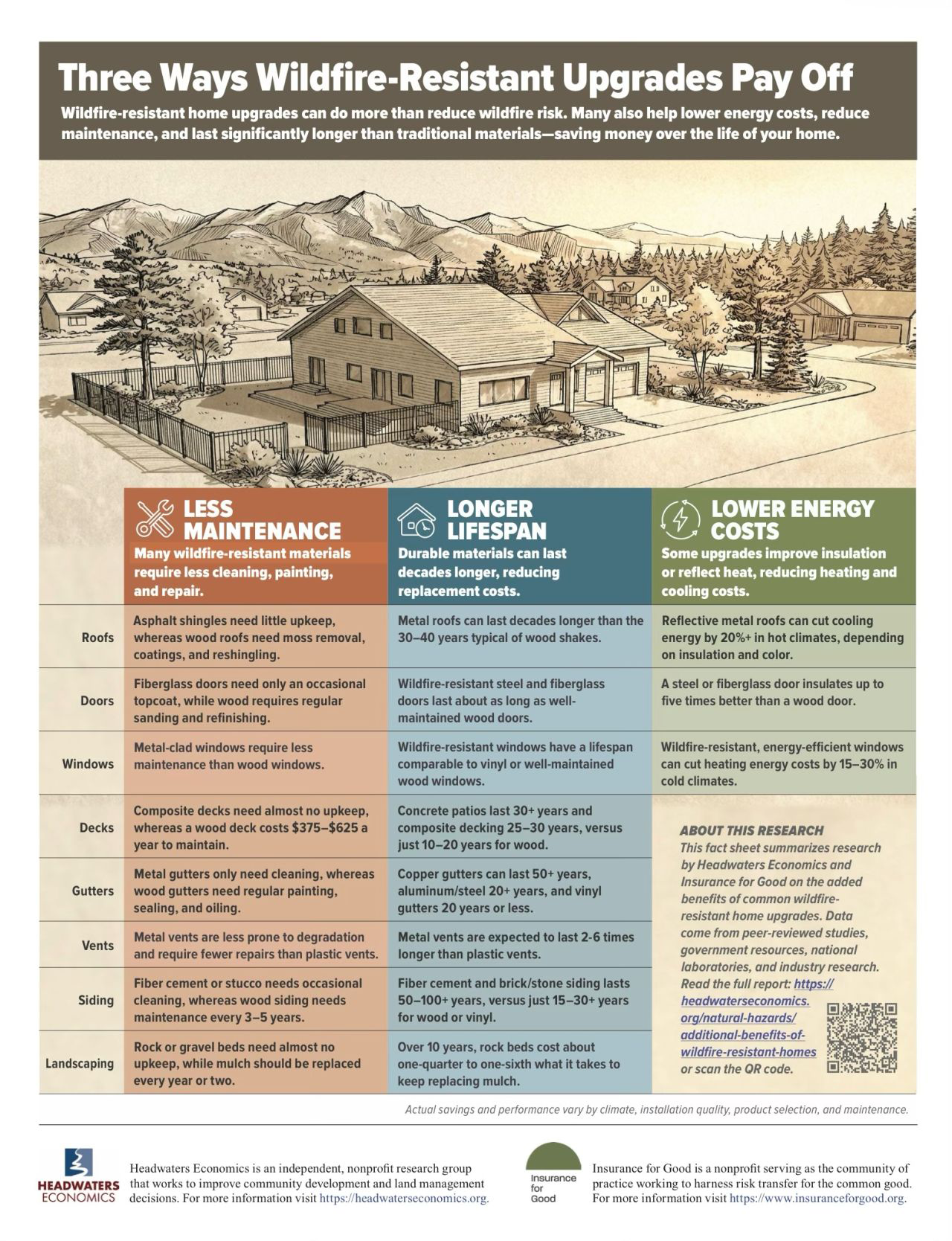
Headwaters Economics and Insurance for Good conducted an evidence review and synthesis to identify the household benefits of wildfire-resistant retrofits beyond reduced fire risk. The finding is that many of these upgrades deliver lasting value well beyond lower wildfire losses.
The research points to three benefits:
- Lower energy costs. Reflective metal roofs, for example, can reduce cooling energy use. Double-paned windows also contribute to energy savings.
- Reduced maintenance. Composite decks require less upkeep than traditional alternatives, which means fewer repairs and less time and money spent on routine care.
- Longer-lasting materials. Durable siding can last decades longer than traditional materials, and steel and fiberglass doors add to a more durable home overall.
In other words, a home hardened against embers and flames is often also a home that is cheaper to run, easier to maintain, and built to last.
Investing in performance, not just protection
This changes how homeowners can think about wildfire resilience. Rather than a defensive expense with a payoff only if the worst happens, many upgrades can be viewed as investments in a home’s long-term performance and affordability. Savings on energy and maintenance can help offset the initial investment over time.
That has practical consequences for prioritizing. Homeowners can start with the upgrades that also lower energy or maintenance costs, so part of the expense pays for itself. A roof replacement that cuts cooling costs, or siding that won’t need replacing for decades, does double duty.
What it means for communities
The findings matter beyond individual households. Community leaders and policymakers can use them to design funding programs, educational initiatives, and incentives that make wildfire-resistant upgrades easier and more affordable to choose.
There is also an opportunity in the overlap with energy efficiency. Because many of these upgrades save energy, efforts to promote wildfire safety and efforts to promote energy efficiency can be built to support one another. Programs that combine the two goals can help communities get more out of every dollar they invest.
Where to find the details
Headwaters Economics has made the research accessible in several formats. Detailed findings for each upgrade are available as a downloadable spreadsheet, and a one-page PDF summarizes the benefits. Together, they give homeowners, builders, and local officials a practical reference for comparing options.
Click the link to read the full article and download the spreadsheet and PDF.
https://headwaterseconomics.org/natural-hazards/additional-benefits-of-wildfire-resistant-homes/
The bottom line
Wildfire resilience is often framed as a cost of living in fire-prone areas. This research offers a more encouraging view: the same upgrades that protect a home can also lower its bills, reduce its upkeep, and extend its life.
For homeowners weighing retrofits, builders advising clients, and community leaders shaping local programs, that makes the case for wildfire-resistant construction stronger and more practical.
The full article with downloads can be read here:
https://headwaterseconomics.org/natural-hazards/additional-benefits-of-wildfire-resistant-homes/
Headwaters Economics is an independent, nonprofit research group that works to improve community development and land management decisions. For more information, visit: https://headwaterseconomics.org
Insurance for Good is a nonprofit serving as the community of practice working to harness risk transfer for the common good.
For more information visit: https://www.insuranceforgood.org